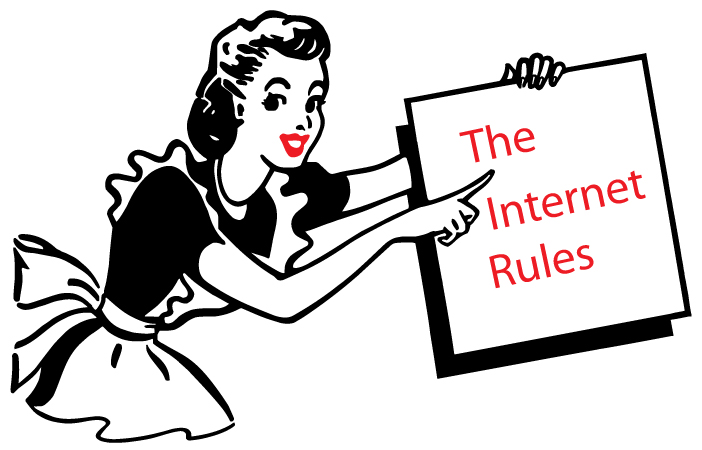
Remembering what Mama always said...
can keep you from going wrong with your online business.
The following is an ongoing compiled list:
1. "Always date a girl with a good reputation." When buying a previously owned URL make sure it has a good reputation, as years of cached links may show up on the search engine that you don't recognize.
2. "Be yourself." Google's Panda update is cracking down on content farming.
3. "Why buy the cow, if the milk is free?" Be careful not to give away too much of your service that you should be paid for in your social media marketing.
4. "There's always more fish in the sea." Watch your ROI, if your efforts to get a prospective client's attention on social media are falling on deaf ears ... or blind eyes, move on. Social media can take up a lot of your time and money - a big picture strategy should go hand-in-hand with focus.
5. "Don't move too fast; take your time to get to know each other." A sudden influx of SEO activity can actually hurt your search engine rankings in the long run. Also, being hasty can allow mistakes to go unnoticed. It is more important to take your time to be accurate and strategic where your website's information and links will be placed.
6. "It's not nice to lead people on." Make sure the links that you post with your content on social media or websites go directly to the page with the information you are talking about. You will lose people along the way in a string of links.
7. "If you like it, put a ring on it." When liking an article by a higher profile company or individual, make sure you comment with something compelling that will result in views to come back around to your website or social media page.
8. "Beauty is skin deep." Your website may be attractive and innovative, but if it is filled with shallow content, grammatical errors and is hard to navigate, the viewer will lose interest and so will the search engines.
9. "Stay away from Lover's Lane." Don't park your website's URL while you are building your website. Sure, you may make a few bucks, but you have no control of what is going to be linked to your parked domain by the registrar. You may have cached links and content that can harm the brand image you are trying to portray once you go live.
10. "It's not you, it's me." What goes around, comes around. Unsubscribe from other small business' emails graciously. Read why HERE.
Can you think of anymore?
1. "Always date a girl with a good reputation." When buying a previously owned URL make sure it has a good reputation, as years of cached links may show up on the search engine that you don't recognize.
2. "Be yourself." Google's Panda update is cracking down on content farming.
3. "Why buy the cow, if the milk is free?" Be careful not to give away too much of your service that you should be paid for in your social media marketing.
4. "There's always more fish in the sea." Watch your ROI, if your efforts to get a prospective client's attention on social media are falling on deaf ears ... or blind eyes, move on. Social media can take up a lot of your time and money - a big picture strategy should go hand-in-hand with focus.
5. "Don't move too fast; take your time to get to know each other." A sudden influx of SEO activity can actually hurt your search engine rankings in the long run. Also, being hasty can allow mistakes to go unnoticed. It is more important to take your time to be accurate and strategic where your website's information and links will be placed.
6. "It's not nice to lead people on." Make sure the links that you post with your content on social media or websites go directly to the page with the information you are talking about. You will lose people along the way in a string of links.
7. "If you like it, put a ring on it." When liking an article by a higher profile company or individual, make sure you comment with something compelling that will result in views to come back around to your website or social media page.
8. "Beauty is skin deep." Your website may be attractive and innovative, but if it is filled with shallow content, grammatical errors and is hard to navigate, the viewer will lose interest and so will the search engines.
9. "Stay away from Lover's Lane." Don't park your website's URL while you are building your website. Sure, you may make a few bucks, but you have no control of what is going to be linked to your parked domain by the registrar. You may have cached links and content that can harm the brand image you are trying to portray once you go live.
10. "It's not you, it's me." What goes around, comes around. Unsubscribe from other small business' emails graciously. Read why HERE.
Can you think of anymore?